Tag

Geriatric medicine

is the specialisation of the future

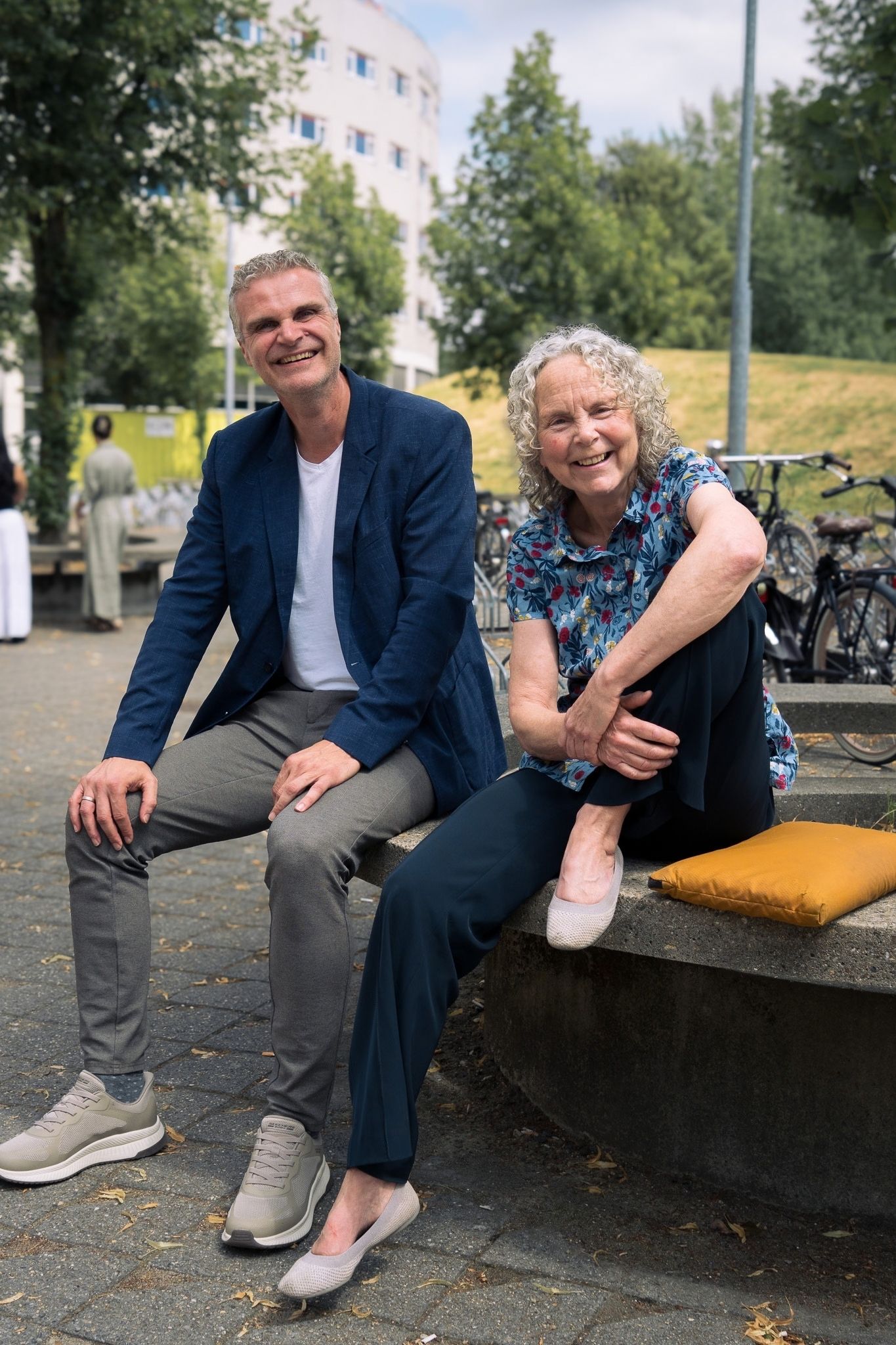
It used to be something the village doctor did on the side. Today, geriatric medicine has evolved into a forward-looking specialisation — which is for the best, given our rapidly ageing population. Janine Collet, a pioneer of geriatric medicine, and Femke Deguelle, now training as a specialist, discuss the past and future of their chosen field.

In the early days, Janine Collet rented a small farmhouse in a North Brabant village; chickens roamed freely in the garden. When her pager went off while she was out visiting a patient, she’d hustle to find a landlineto call the practice.

It was during her medical studies at Maastricht University in the 1980s that her interest was sparked in older patients with complex care needs. “As trainee GPs, we were sent all over the country. I ended up at a practice in Waalre with a large elderly population. I enjoyed puzzling through their problems, especially when they showed unusual behaviour.”

Driven by that fascination, Collet carved out her own path into geriatric medicine. At the time, there was no dedicated training programme for the specialty.
Both generalist and specialist

That has since changed. A postgraduate training programme in geriatric medicine has been on offer in the Netherlands since 1989. Doctors learn to treat vulnerable older people who often have multiple health problems at once. It was initially a two-year programme focused narrowly on nursing home care, but as the field developed into a recognised medical specialty, the programme was extended to three years. Since 2020, it has also been offered at UM.

GP Femke Deguelle started the UM programme last September. “In this field you’re both a generalist and a specialist,” she says. “Very few specialties take such a broad, holistic view of the patient. The medical aspect matters, but it’s really about the person sitting in front of you. Who are they, and how can you improve their quality of life? At the same time, the cases are often complex, which allows me to go into depth. That combination really appeals to me.”

The structure of the programme is similar to GP training, so she knew what to expect. “There’s a lot of space to share stories with other students and to reflect together. Not just about medical content, but about how you deal with family members or conduct a difficult conversation with a caremanager. We also discuss ethical issues and dilemmas. You can learn the facts of medicine from books, but these kinds of conversations are what I gain from the most.”


In the 1970s and 80s, the Faculty of Medicine was still in its infancy. “The programme was very much a work in progress, and we helped to shape it,” Collet recalls. “Our cohort rewrote an entire course book because we disagreed with the content. We invited experts ourselves — we’d just call them up and ask if they’d teach us. We took the train to Amsterdam for our anatomy class because there was no one in the region who could teach it.”

All facets of elderly care

Today, Collet works at the mental-health organisation Mondriaan. She supervises all interns in geriatric medicine and, among other roles, leads the neuropsychiatry speciality. “Our interns learn a great deal about diagnostics and treatment in old-age psychiatry, which is increasingly in demand in nursing homes.”

Only the most care-dependent older people are admitted to nursing homes. Meanwhile, the number of older people living independently continues to grow, and their care needs are often too intensive and complex for GPs to manage on their own. Here, too, geriatric specialists play a crucial role.

“Anywhere you find older people, a geriatric specialist can work,” Collet says. “As an adviser or consultant to GPs, in residential settings for older people with psychogeriatric or physical impairments … Training programmes today cover all these facets.”

“Anywhere you find older people, a geriatric specialist can work.”

Trust the professional

Fifty years ago, older people only had their GP to turn to. “Which was fine,” Collet says, “because you still had village doctors who’d known their patients forever and understood their family situations and backgrounds. That knowledge is essential in elderly care. When things became too complex, patients were admitted to nursing homes.”

And so the demand grew for doctors specialising in elderly care outside the hospital setting. “More protocols and guidelines were introduced, both in general practice and in geriatric medicine. The focus turned to the most appropriate treatment, rather than the same approach that had been used out of habit for years.” An important step forward in terms of professionalisation, but Collet adds a caveat. “Over the past decade, regulation and bureaucracy have exploded. It’s increasingly about ticking boxes: does someone meet the criteria for treatment or admission? A GP or geriatric specialist may know perfectly well what a patient needs, but an assessment body may decide otherwise. I find that troubling. My hope is that, in the future, professionals will be trusted more.”

“The specialisation is sometimes seen as a bit dated and unfashionable, but I think that view is undeserved. It’s an incredibly forward-looking field that keeps on evolving.”

Nothing old-fashioned about it

According to Deguelle, the future of the geriatric specialist is assured. “No other specialtisation is developing as rapidly, especially here in the south, with our ageing population. As a result, we’re being deployed in more and more settings. In some parts of the Netherlands, geriatric specialists are even working in emergency departments. The specialty is sometimes seen as a bit dated and unfashionable, but I think that view is undeserved. It’s an incredibly forward-looking field that keeps on evolving.”

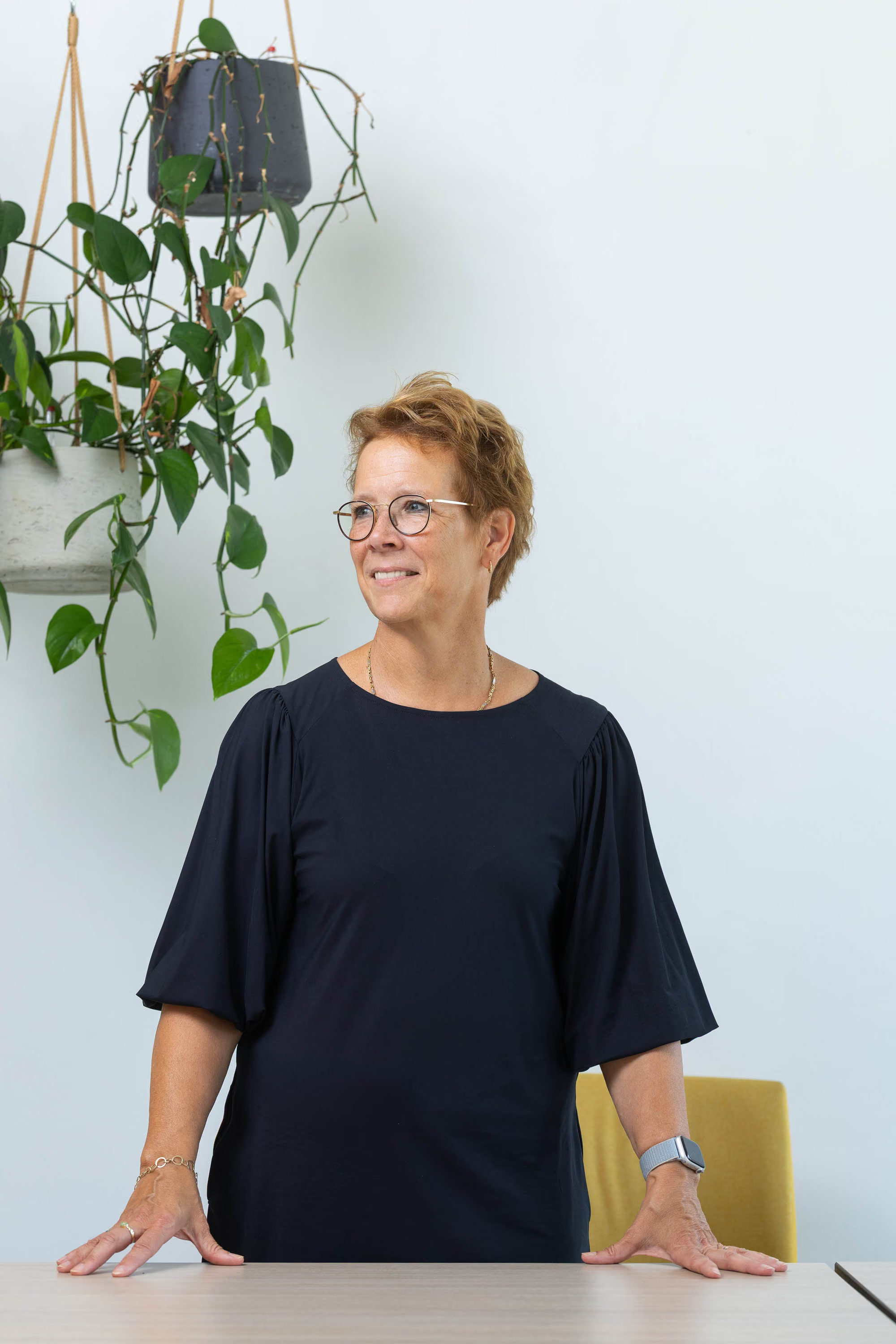
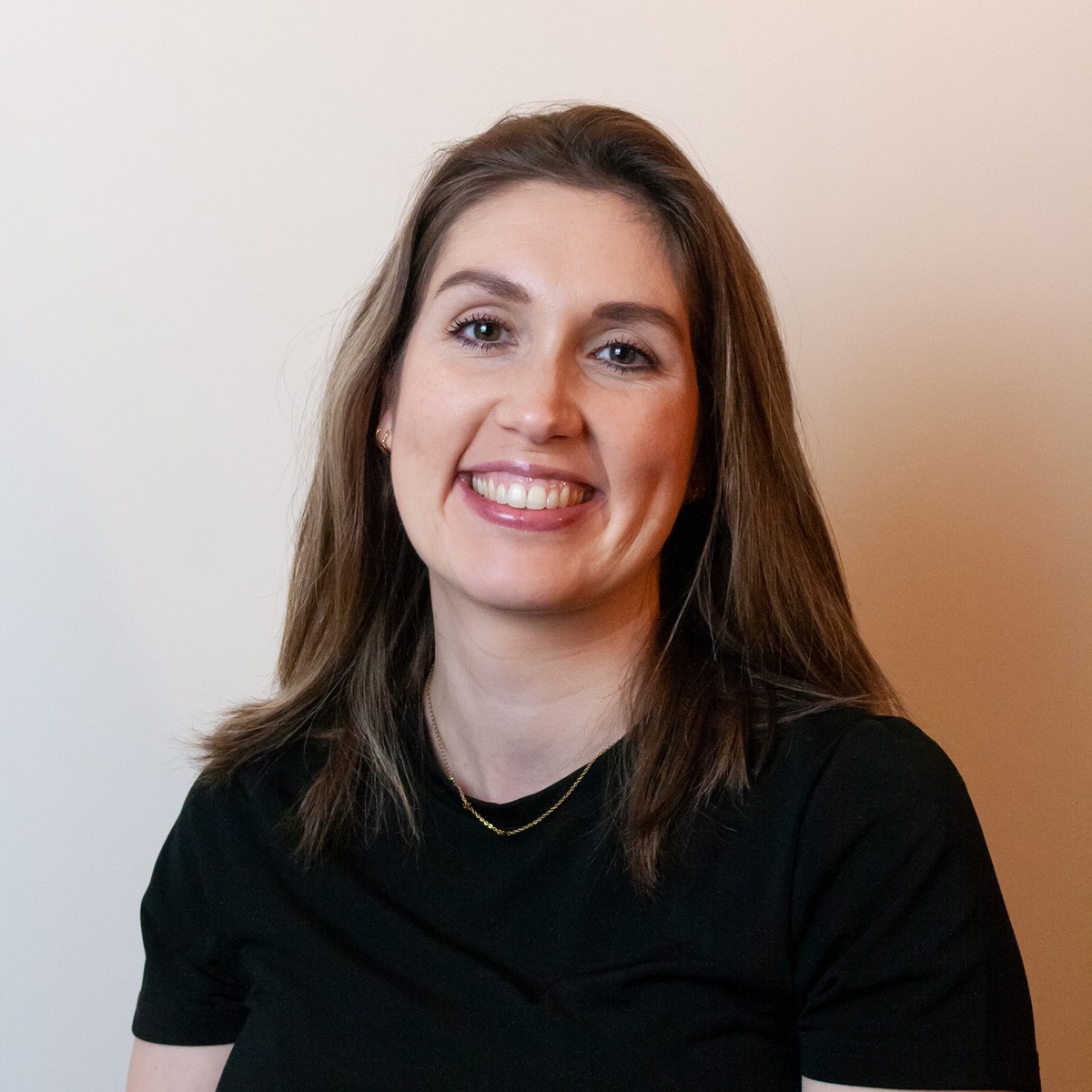
Dr. Femke Deguelle

Dr. Femke Deguelle is a General Practicioner and started training as a geriatric specialist at Maastricht University in September 2025. Previously, she studied medicine and trained as a GP at UM.

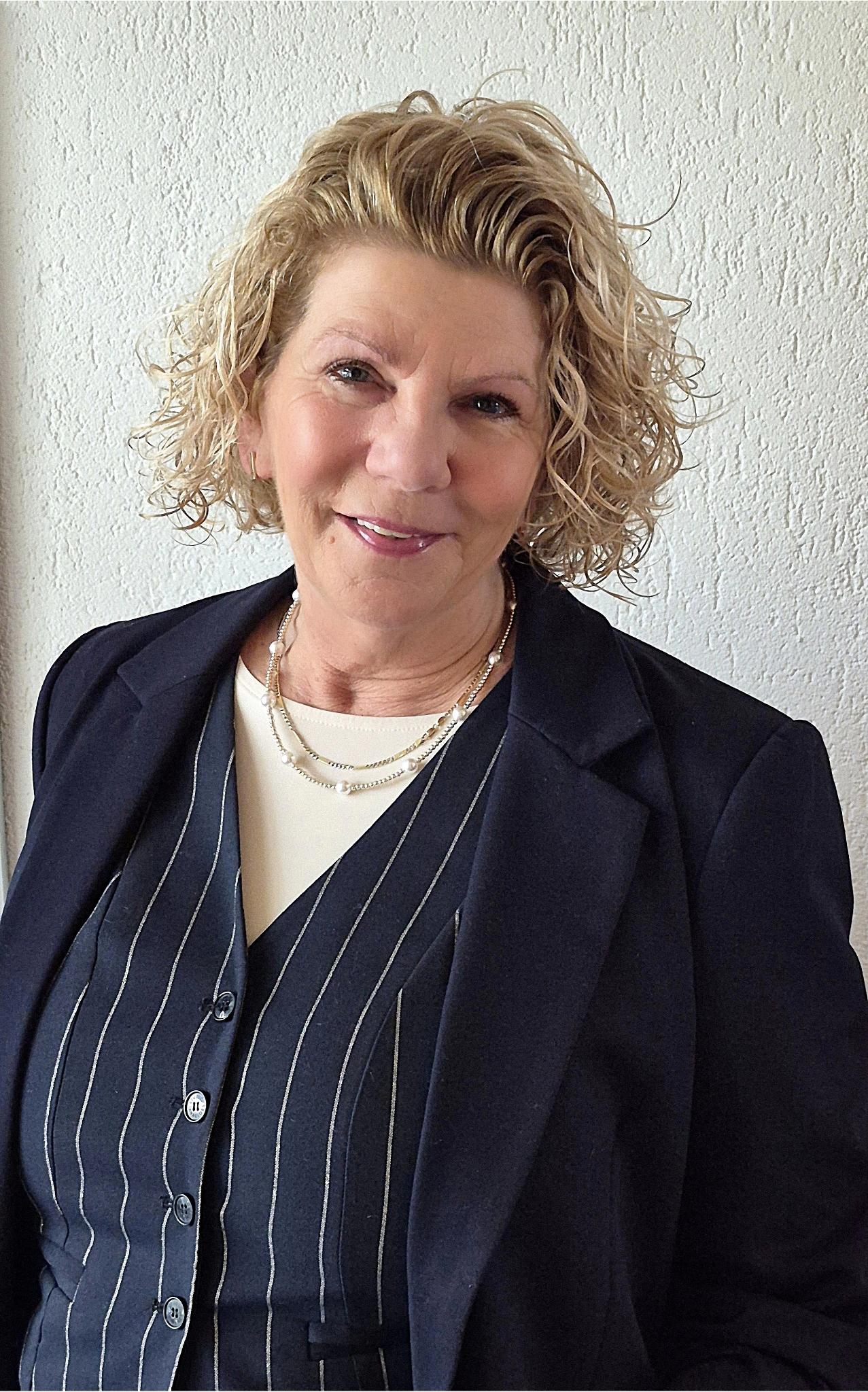
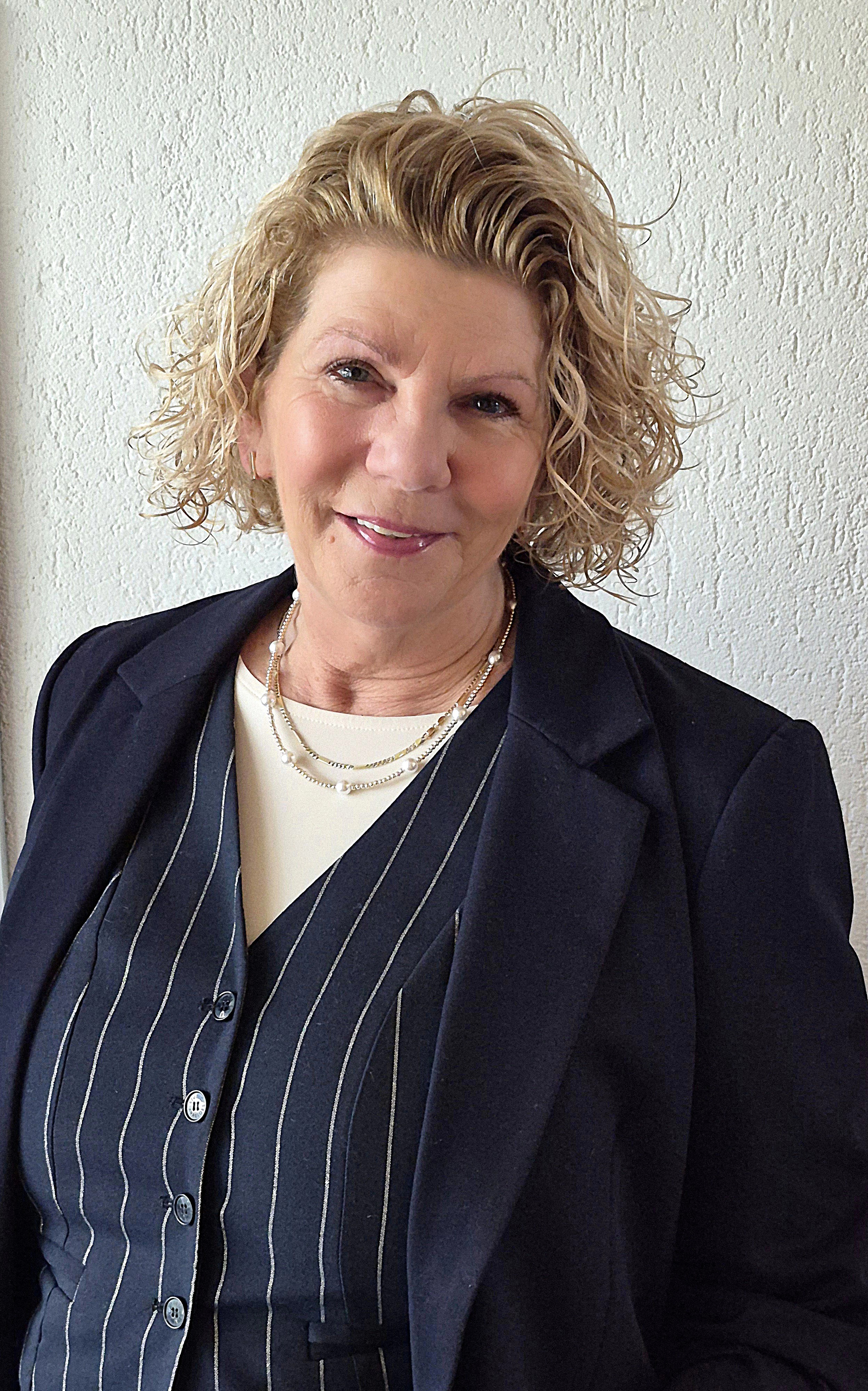
Dr. Janine Collet

Dr. Janine Collet is a geriatric specialist, working at Mondriaan as a care programme leader and neuropsychiatry lead. She was among the first medical student cohorts at UM in 1977.