Progress
also means sharing our knowledge on health
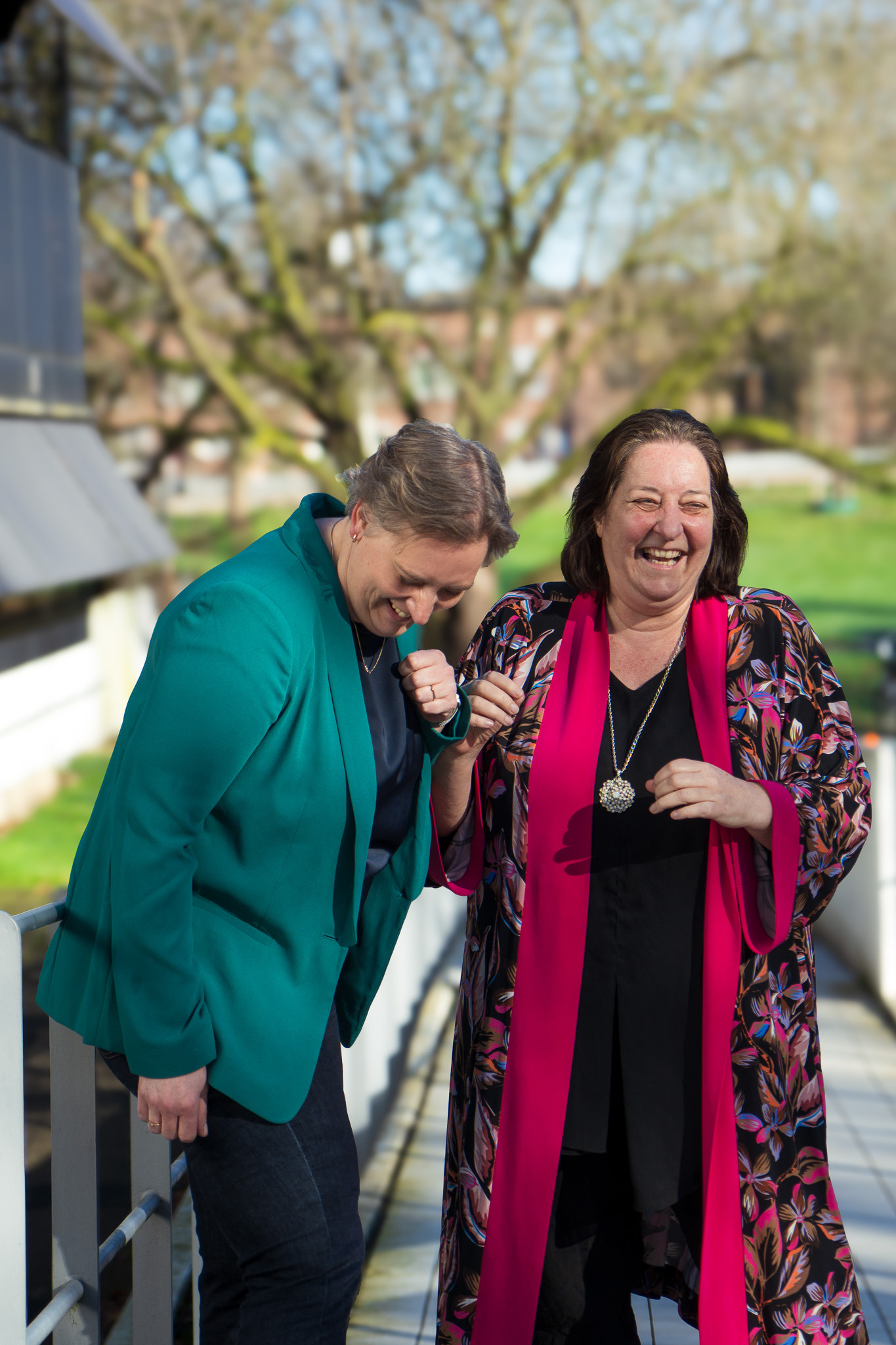
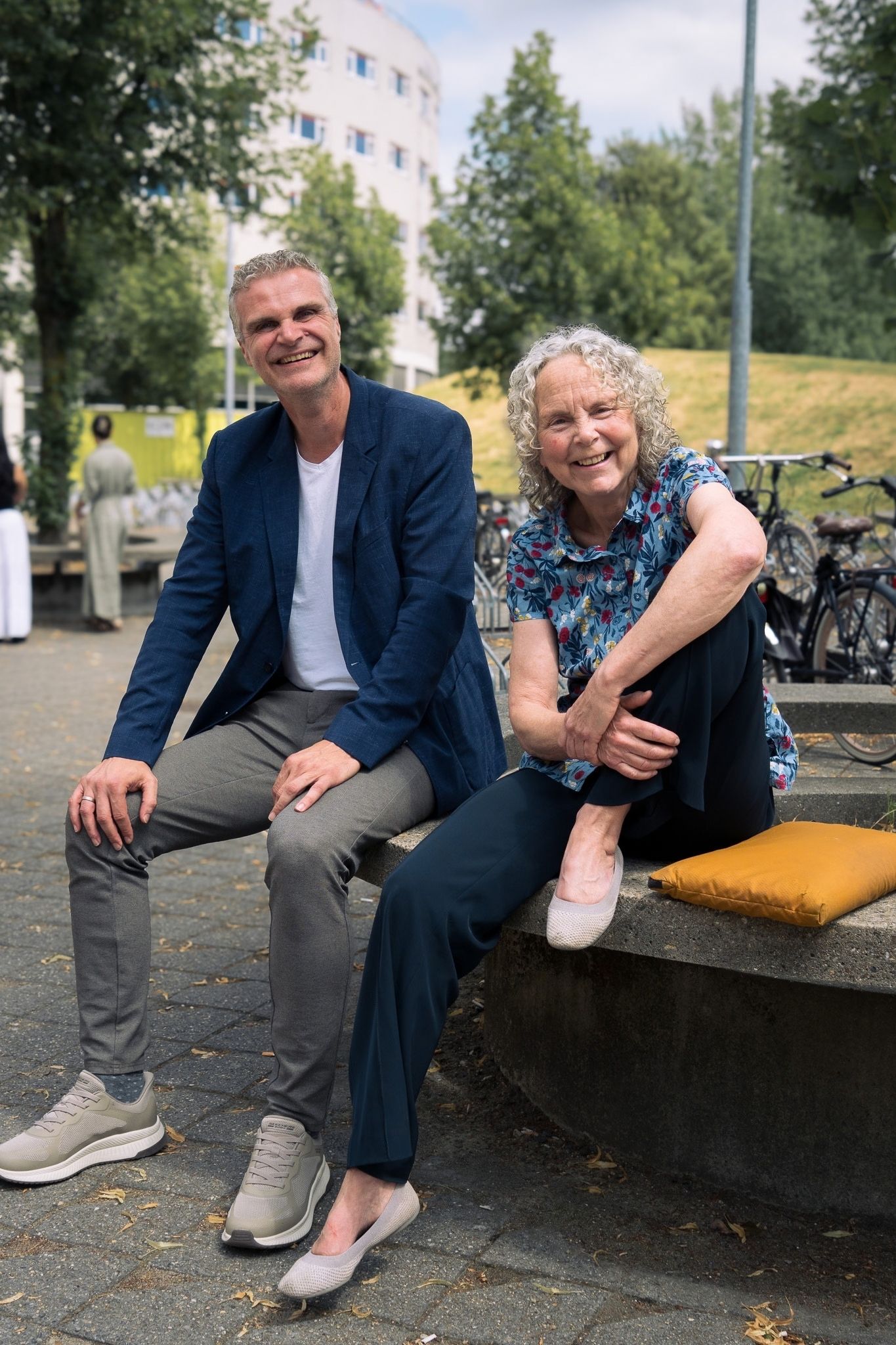
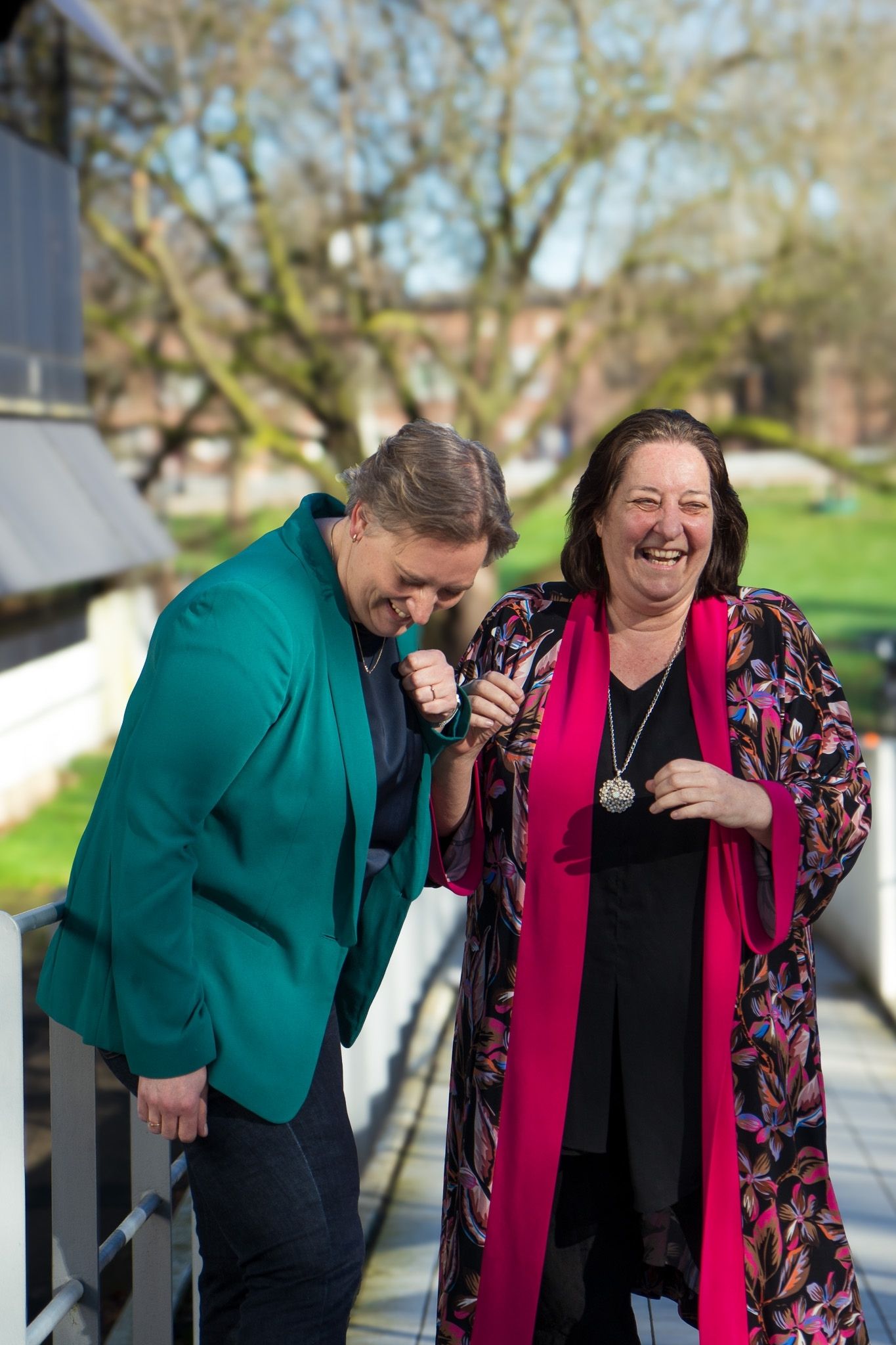
They both started as Health Sciences students at our faculty and worked their way up to the position of director. While one is committed to education, the other is committed to research. Yet Mariëtte Cruijssen and Silvia Evers find many similarities when they talk about their careers, our faculty and what the slogan for fifty years FHML “ahead in health” really means to them.
Silvia started the Health Sciences programme in 1984 as one of the first students of what was then called Mental Health Sciences. Mariëtte followed ten years later and specialised in Policy and Management. Mariëtte: 'What I quickly noticed back then, and fortunately still notice today, is how much input you could have as a student. At the time, I was the only student member of the Education Board (Dutch: Opleidingsbestuur). Since then, my heart lies with educational policy. I have grown within the faculty from secretary of the Faculty Board to director of the Institute for Education."
Silvia nods in agreement when it comes to opportunities for students: "At the time, we lacked a module on childhood and youth in our programme. Instead of just accepting it, we were given the opportunity to develop that module ourselves. I learned a great deal from it. These skills have come in handy in various positions within and outside Maastricht University. Now, I am the proud director of the Care and Public Health Research Institute (CAPHRI) and I also work part-time for the TRIMBOS Institute.”
Mariëtte Cruijssen and Silvia Evers
How would you describe the differences between our faculty and health faculties at other universities?
Silvia: “Even when the university started its medical programme in 1976, our founders looked beyond the curative aspect of healthcare. Think of subjects such as medical sociology, health philosophy, health law and health economics. Back then, we were already working on the broad aspect of health sciences. Did you know that probably one of the first professors of health economics in the Netherlands was appointed in Maastricht? You can still see that broad and innovative approach in our research institutes, which study different aspects of health, and of course in our programmes.”
Mariëtte: "That's exactly right. Just as our research is multidisciplinary, so is our education. Different disciplines are integrated and offered to students in a contextual manner. When we talk about our founders, we also have to talk about Problem-Based Learning. That has been woven into our DNA for fifty years. Even if we wanted to deviate from that, which we don't, it wouldn't be possible. Our entire building architecture is designed to facilitate small-scale education.”
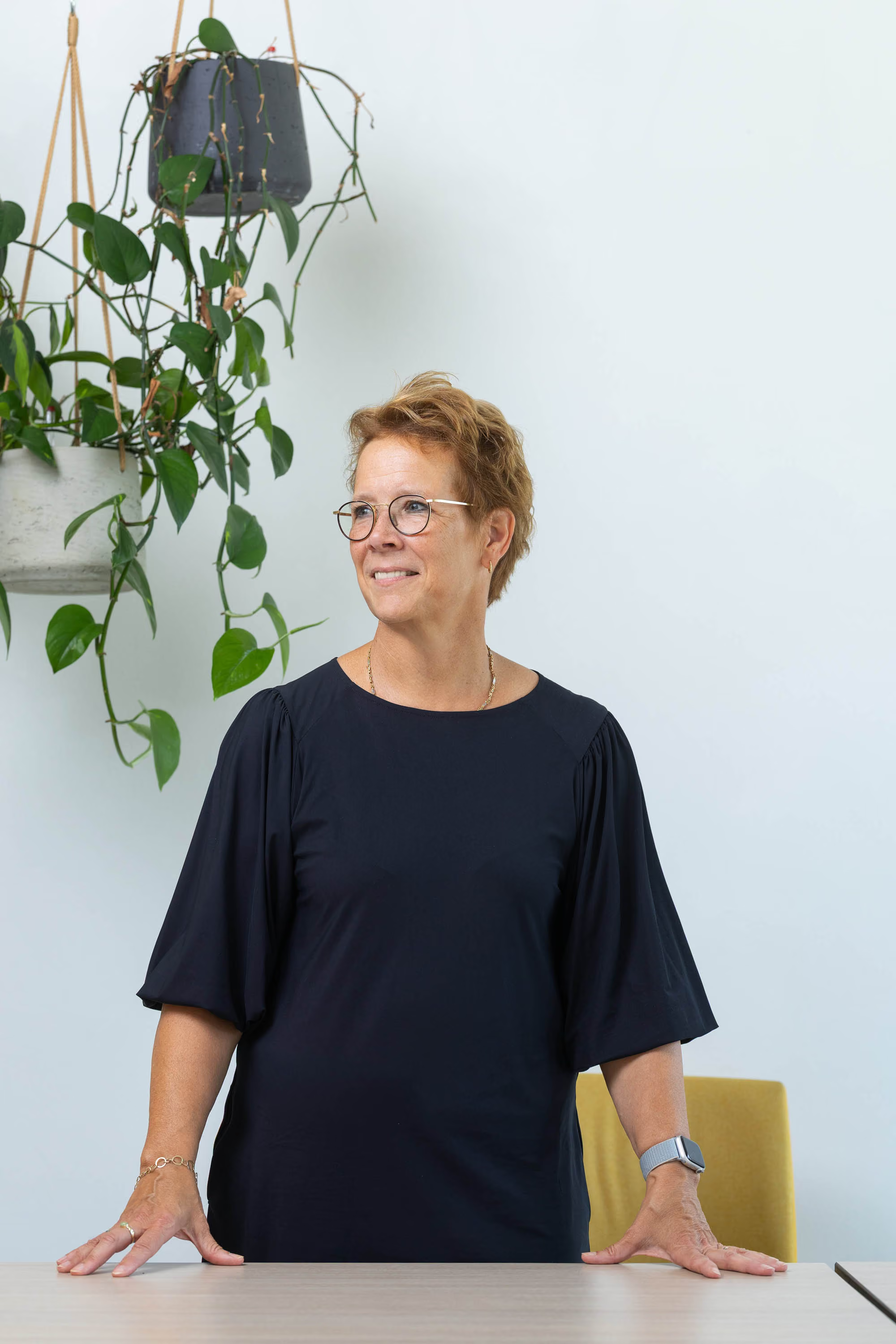
Mariëtte Cruijssen
Along with the faculty, you have also grown personally. On what do you look back with pride?
Mariëtte: "Our faculty continues to involve students in the development and organisation of education, just as it did when we were students. That doesn't happen by itself, and I'm proud that we continue to succeed. Furthermore, I have gained extensive experience in various positions over the years, but I am not a professor and I do not have a PhD. On a personal level, I am proud that my career has brought me to where I am today. I do not believe that would have been possible thirty years ago in the academic structure as it was then."
Silvia: "From the outset, we have also worked according to evidence-based principles in education, research and healthcare. This collaboration between research and education is not seen to the same extent everywhere else. The educational role that our researchers play is inspiring for the students because they are dealing with passionate, knowledgeable people. And most researchers find it really interesting to talk about their own research. When you see enthusiastic people as a student, it helps to get you excited about it too. Of course, I am extremely proud of CAPHRI, not only because I am the director, but because we deliver excellent research with a major impact on society."
Speaking of societal impact, what does the slogan ‘Ahead in health’ mean to you?
Silvia: "Health research with impact means involving citizens from the very beginning. It is easy to reach highly educated people who work in healthcare. However, it is important to work for citizens who are outside the knowledge field, in the city, in Limburg, in the Netherlands and internationally. And I think that many staff members organise research and education in such a way that they reach those people. Progress does not only mean developing high-tech solutions, but also sharing our knowledge about health. Although this may sound simple, it is very innovative for healthcare when people develop the skills to take control of their own health. Knowledge should never be an exclusive commodity."
Mariëtte: "We are also trying to integrate the ambition Silvia describes into our education programmes. That is no easy task, because finding suitable external projects for large numbers of students is no simple matter. But we are not shying away from the challenge; we are experimenting where possible and keeping our eyes open to opportunities in society. Every year, approximately 850 bachelor's students and 1.000 master's students graduate, and they make a significant contribution to the development of health and healthcare in the Netherlands and beyond."
.jpg)
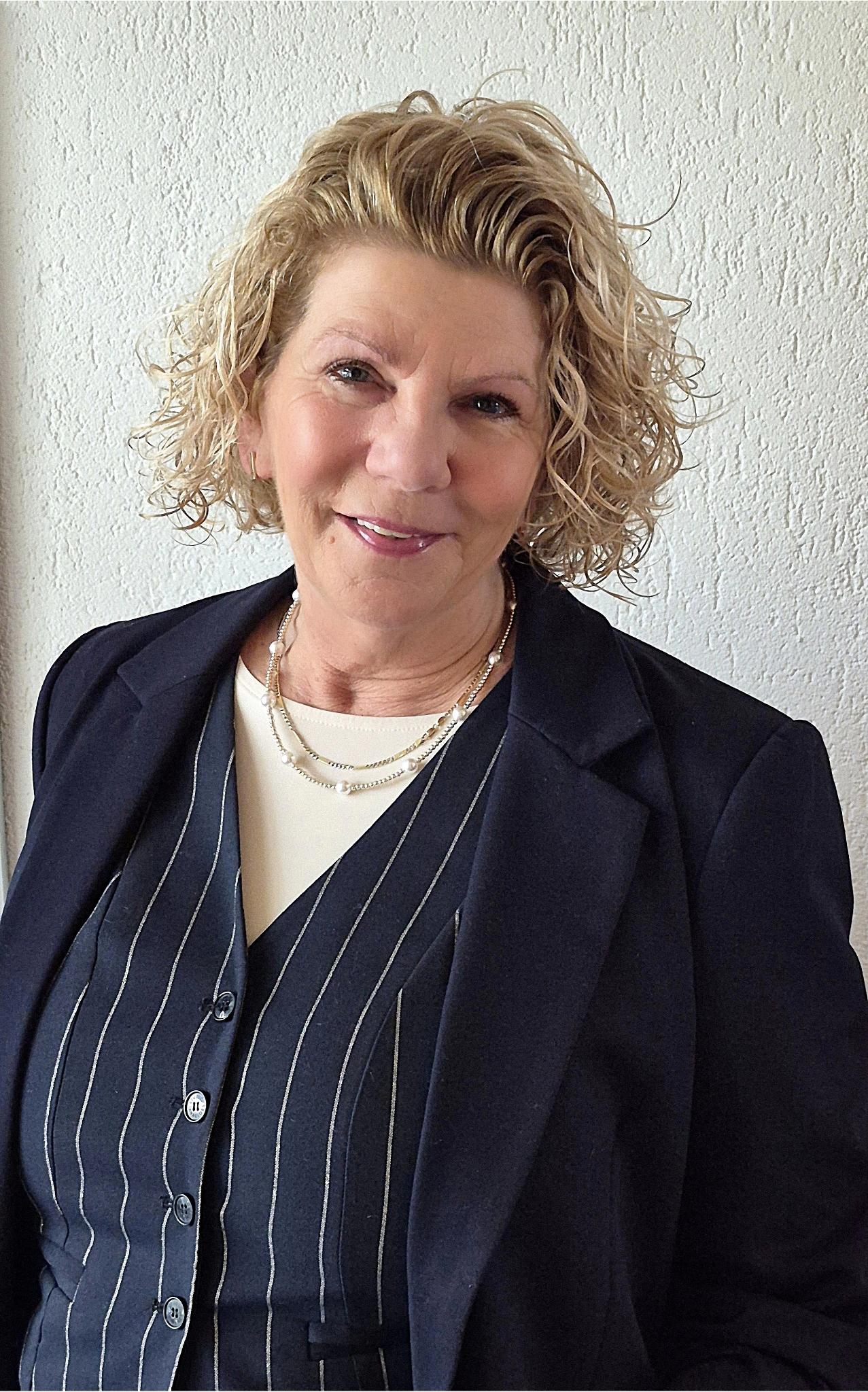
Silvia Evers
We are looking back on the last 50 years, but of course we are also looking to the future. What do the next five decades hold for you?
Mariëtte: “For me, this means that we will continue to focus on the innovative nature of our education. We do this by closely following our quality cycle and continuing to innovate. In addition, we try to give the programmes as much autonomy as possible so that they can determine what suits their lecturers and students best. In this way, we continue to develop with a strong focus on personal and professional development in addition to subject-matter competencies.”
Silvia: "Innovation is often not black and white; it can also consist of small alterations. The innovative character of our university embodies this idea. It is important to always critically reflect on what can be done differently and better, and to take active initiative in this regard. That is inherent to working for a university. Those foundations of critical professional self-reflection from fifty years ago still exist today and will hopefully remain in place in the future."
Finally, do you have any tips for colleagues who are also pursuing a long career within our faculty?
Silvia: “At CAPHRI, we always focus on team science. Integral research is done with a team, and you need all the skills you can get. Staying curious about the people who work here and listening to their insights is extremely valuable.”
Mariëtte: “Of course, everyone follows their own path, but when you work for the faculty, you work for a larger entity with a common goal. Maastricht University offers many opportunities, and through cooperation, honesty and hard work, you can build a great career here.”
Text: Ruben Beeckman


.jpg)

.jpg)
.jpg)